
Specialized Logistic: explore the critical differences between retail and medical consignment logistics. This article dives in Point-of-Consumption (POC) consignment model, regulatory traceability, and the visibility gap impact in healthcare supply chains
1. What Is Medical Consignment Inventory?
Medical consignment inventory refers to medical supplies, devices, or implants stored in a healthcare facility that remain owned by the supplier or manufacturer until the moment of use.
Consignment inventory model gives hospitals immediate access to critical stock without direct financial commitment until stock consumption occurs—a significant advantage in a budget-constrained, demand-volatile inventory management environment.
2. Specialized Logistics: Inside Medical Consignment
While the concept of consignment inventory is used across industries, medical consignment inventory stands apart in its regulatory complexity and stock shelf-life constraints. Unlike retail—where stock rotation and visual merchandising dominate—medical consignment inventory must adhere to strict stock traceability and sterility standards.
One of the fundamental differences between medical and retail consignment lies in the "trigger" for ownership transfer. While retail operates on a Point-of-Sale (POS) model, medical consignment relies on a Point-of-Consumption (POC) model. This shift significantly impacts financial reporting, liability, and inventory tracking complexity.
In both sectors, the supplier retains ownership of the stock, keeping it off the buyer's balance sheet. However, the shift from a Point-of-Sale (POS) model to a Point-of-Consumption (POC) model creates a "visibility gap" that changes how both the hospital and the supplier behave.
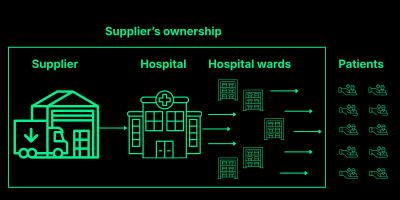
When inventory is distributed directly into wards, operating rooms (ORs), and labs, it effectively enters a "black hole" for traditional accounting systems. Here is an analysis of why this difference is so significant.
3. Operational Challenges
The "Visibility Gap"
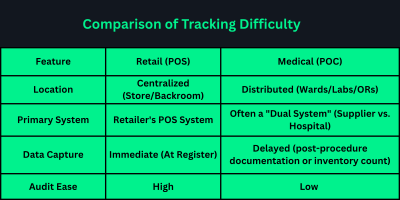
Tracking inventory at the Point of Consumption (POC) is significantly harder than at the Point of Sale (POS) for several reasons:
- Decentralized Storage: Medical supplies are often distributed throughout wards, operating rooms, and labs rather than a centralized stockroom.
- The "Blind Zone" Effect: Items effectively enter a "black hole" where they remain on the supplier's books, but the hospital has limited visibility or incentive to track them as strictly as owned assets.
- Cycle Count Barriers: Suppliers face logistical hurdles counting stock in sterile or restricted zones, leading to "Ghost Inventory"—items that are missing but still appear on digital records.
- Charge Capture Leakage: If a clinician fails to document a used item (e.g., a screw used in surgery), it creates "revenue leakage" for the hospital and an uncompensated loss for the supplier.
Impact on Patient Safety (The Expiry Risk)
In retail, a "point of sale" delay just means a slower inventory update. In medical "point of consumption," poor tracking can be fatal.
- Static vs. Dynamic Expiry: In a distributed model, a box of heart valves might sit in the back of a drawer in Ward A while Ward B is out of stock. Because there is no central visibility, the valves in Ward A might expire.
- Liability: Since the supplier retains ownership, they technically bear the cost of the expired item. However, the hospital bears the clinical risk if an expired item is accidentally used because it wasn't tracked properly at the POC.
The Disconnect: Clinical vs. Financial
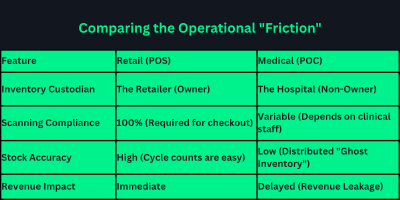
In a retail POS, the person buying the item is the one triggering the transaction. In a hospital POC, the person "consuming" the item is a clinician focused on a patient—not a cashier focused on a ledger.
- Retail: Transaction happens during the exchange. (No scan, no sale).
- Medical: Transaction happens after the exchange. (Supply is used, then someone has to remember to document it).
4. The Strategic Promise: Shared Risk, Shared Opportunity
Although for counter-party (supplier) it seems to be significant capital, tired in inventory, this model is still widely used due to hospital’s purchasing power and the competitive necessity to secure long-term contracts. In a landscape where hospitals hold the majority of purchasing power, suppliers often accept the burden of tied-up capital as a strategic trade-off for guaranteed market share and the assurance that their specific products are the ones immediately available to surgeons during critical procedures.
🧮 Redistributing Financial and Clinical Stock Risk
The true strategic strength of medical consignment inventory lies in its ability to redistribute risk. By retaining stock ownership, the manufacturer carries the cost burden of stock holding, while the hospital gains unrestricted access to a wide consignment inventory portfolio. This shared management approach relies on inventory management software to ensure neither party is left with obsolete stock.
📝 Provider and Manufacturer Stock Advantages
For healthcare providers, consignment inventory preserves liquidity and stabilizes stock procurement. Hospitals only pay for stock supplies once applied in treatment, freeing capital for other management initiatives. For manufacturers, the consignment inventory model provides strategic proximity to clinical environments, improving responsiveness and fostering surgeon loyalty through better stock availability. Modern inventory management relies on inventory management software to bridge the gap between these two entities.
📊Managing Stock Uncertainty in High-Stakes Specialties
In fields like orthopaedics, consignment inventory is the only feasible management model to ensure every possible stock size is available. Successful inventory management hinges on shared stock visibility, allowing teams to use inventory management software to track:
- Which stock devices are used or expiring.
- Which stock configurations are trending in inventory management.
- Dynamic stock replenishment across multiple consignment inventory sites.
5. The Role of Transparent and Clear Consignment Agreements: Building an Operational Stock Framework
Medical consignment inventory is a trust‑based partnership that demands explicit management rules. A written consignment inventory contract must translate policy into everyday stock business processes, defining:
- Responsibility for expired stock: Who monitors dates and performs management of stock rotation.
- Tracking and traceability: Linking stock to patient records via inventory management software.
- Information ownership: Determining the “official” stock dataset for inventory management.
Effective management of these contracts is easier when inventory management software serves as the neutral arbiter of stock data. Without clear inventory management protocols, consignment inventory can quickly become an operational blind spot.
Eliminate Stock Vulnerabilities with Ventory
To overcome stock vulnerabilities, a shared digital foundation is indispensable. By digitizing inventory management, hospitals and suppliers can move away from manual management of stock.
Ventory provides the inventory management software necessary to turn consignment inventory from a liability into a sales catalyst.
Ventory’s inventory management software ensures:
- Every stock transaction is recorded in real time for better management.
- Stock expiry alerts and consignment inventory status are mutually visible.
- Inventory management software keeps stock data synchronized.
- PAR levels are tracked and replenishment orders are generated automaticlally
- Consignment stock counting is automated via advanced barcode reading
- No extra-equipment required, only mobile phone
- Manual errors are minimized thanks to advanced barcode reading
Whether it is stock replenishment or the management of expiring items, inventory management software provides the visibility needed for successful consignment inventory partnerships.
Ready to modernize your consignment partnership? 👇
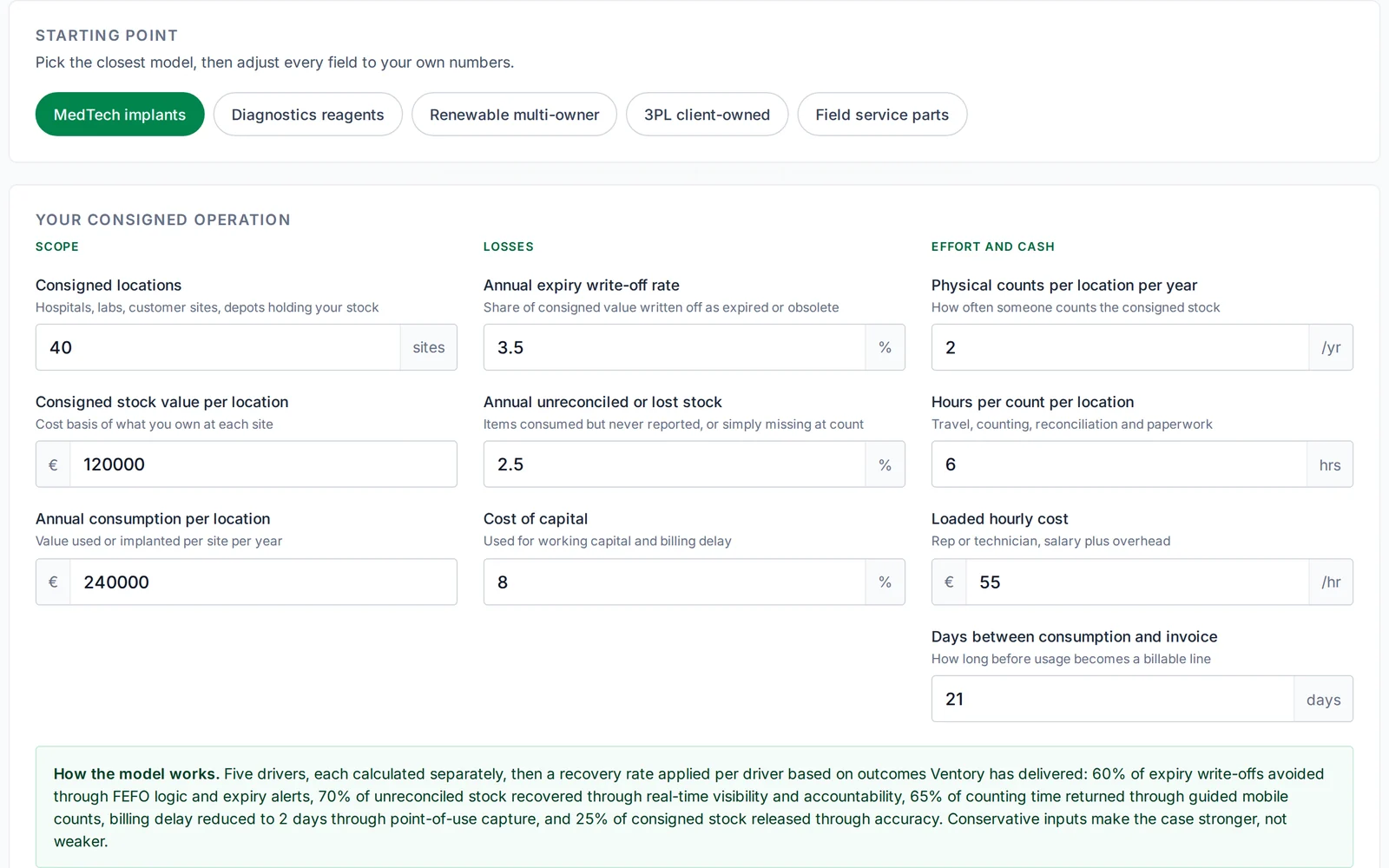
Ten questions. You get a field readiness score, a gap tier and the three fixes worth doing first.

Ventory is the field inventory layer between your ERP or WMS and the teams working outside the warehouse: engineer vans, forward stocking locations, consigned stock and loaner kits.
About Ventory